The Privacy vs. Convenience Dilemma: Finding the Right Balance Online

Sarah Mitchell
4 April 2026
The Privacy vs. Convenience Dilemma: Finding the Right Balance Online
Introduction
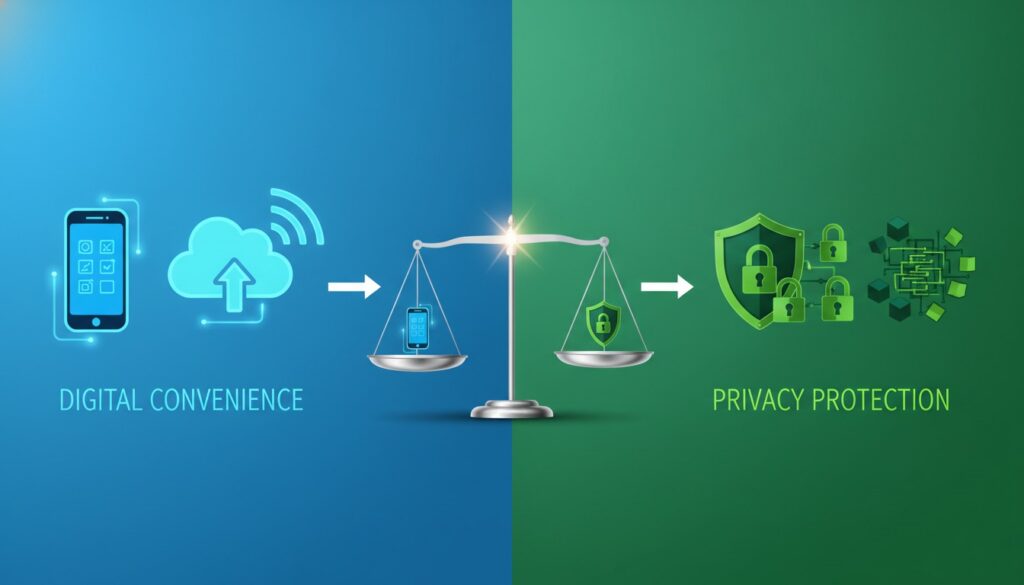
In today’s hyperconnected world, we face a constant digital tug-of-war between protecting our personal information and enjoying the seamless convenience that modern technology offers. Every click, swipe, and tap presents us with this fundamental question: How much privacy are we willing to sacrifice for convenience?
From one-click purchases to personalized recommendations, from location-based services to smart home automation, our digital lives are increasingly built on the foundation of data sharing. While these innovations have revolutionized how we work, shop, communicate, and entertain ourselves, they’ve also created an unprecedented challenge in maintaining our digital privacy.
The reality is that complete privacy and maximum convenience rarely coexist. However, this doesn’t mean we must choose one extreme over the other. With the right strategies, tools, and mindset, it’s entirely possible to find a sweet spot that preserves your essential privacy while still enjoying the benefits of our connected world.
Understanding the Privacy-Convenience Spectrum
The Convenience Appeal
Modern digital services have mastered the art of making our lives easier. Consider these everyday conveniences:
- Instant authentication through biometric logins
- Predictive text and auto-complete features
- Location-based recommendations for restaurants and services
- Personalized content across social media and streaming platforms
- Smart home integration that learns your preferences
- One-click purchasing with saved payment methods
- Data profiling creates detailed digital portraits of your habits
- Third-party sharing spreads your information across multiple companies
- Behavioral tracking monitors your online activities
- Location monitoring creates detailed maps of your movements
- Financial surveillance tracks your spending patterns
- Banking and financial services (necessary for security)
- Healthcare platforms (essential for proper care)
- Work-related applications (required for productivity)
- Shopping platforms (useful for recommendations)
- Navigation apps (helpful for traffic updates)
- Entertainment services (enhances user experience)
- Social media tracking
- Advertising networks
- Non-essential app permissions
- Review and adjust Facebook privacy settings quarterly
- Configure Google account permissions for apps and services
- Manage smartphone app permissions individually
- Set up browser privacy controls and ad blockers
- Enable two-factor authentication wherever possible
- DuckDuckGo instead of Google
- Startpage for Google results without tracking
- Signal for encrypted communications
- Telegram for privacy-focused group chats
- ProtonMail for encrypted email
- Tutanota for secure business communications
- Firefox with privacy extensions
- Brave for built-in ad and tracker blocking
- Encrypted internet traffic protection
- Geographic privacy by masking your location
- Public Wi-Fi security when traveling or working remotely
- Access to geo-restricted content without compromising privacy
- No-logging policies
- Strong encryption standards
- Multiple server locations
- Transparent privacy practices
- Delete unused social media accounts
- Remove unnecessary browser extensions
- Clear cookies and tracking data monthly
- Unsubscribe from marketing emails and newsletters
- Review and revoke app permissions on mobile devices
- Use virtual credit card numbers for online purchases
- Set up separate accounts for different types of transactions
- Enable transaction alerts to monitor unusual activity
- Consider privacy-focused payment apps like Apple Pay or Google Pay
- Regularly review credit reports for unauthorized activities
- Strong, unique passwords with a password manager
- Two-factor authentication on critical accounts
- Regular software updates for security patches
- Careful social media sharing practices
- Informed consent when installing new apps or services
- Define which types of information you’ll never share
- Set limits on location tracking permissions
- Choose specific times for social media engagement
- Create separate email addresses for different purposes
- Regularly review and update your privacy preferences
- Following privacy-focused news sources
- Reading platform privacy policy updates
- Participating in digital rights advocacy groups
- Learning about emerging privacy technologies
- Understanding relevant privacy legislation in your region
- GDPR in Europe sets strict data protection standards
- CCPA in California provides consumer privacy rights
- Emerging state laws across the US expand privacy protections
- International agreements promote cross-border privacy cooperation
- Audit your current privacy settings on your three most-used apps or services
- Install a reputable password manager and begin creating unique passwords
- Choose one privacy-focused alternative to replace a service you currently use
The Privacy Cost
But convenience comes with hidden costs:
“Privacy is not about hiding something. It’s about protecting everything that makes you who you are.” – Digital Rights Advocate
Practical Strategies for Balanced Digital Living
1. Implement Selective Sharing
Not all data sharing is created equal. Develop a strategic approach to what you share and when:
High-Value Sharing:
Medium-Value Sharing:
Low-Value Sharing:
2. Master Privacy Settings
Every major platform offers privacy controls, but they’re often buried in complex menus. Take time to:
3. Use Privacy-Focused Alternatives
Consider switching to services that prioritize user privacy:
Search Engines:
Messaging Apps:
Email Services:
Browsers:
Advanced Privacy Protection Techniques
Virtual Private Networks (VPNs)
A quality VPN service provides:
Choose VPN providers with:
Data Minimization Practices
Regularly audit and clean your digital footprint:
Financial Privacy Strategies
Protect your financial data while maintaining convenience:
Building Sustainable Privacy Habits
The 80/20 Rule for Digital Privacy
Apply the Pareto Principle to your privacy efforts: 80% of your privacy benefits come from 20% of your efforts. Focus on:
Creating Privacy Boundaries
Establish clear personal policies for data sharing:
Staying Informed About Privacy Trends
The digital privacy landscape evolves rapidly. Stay current by:
The Future of Privacy and Convenience
Emerging Technologies
New technologies promise to bridge the privacy-convenience gap:
Zero-Knowledge Protocols: Allow verification without revealing sensitive information
Differential Privacy: Enables data analysis while protecting individual privacy
Homomorphic Encryption: Permits computation on encrypted data without decryption
Decentralized Identity Systems: Give users control over their personal information
Legislative Developments
Government regulations are increasingly protecting consumer privacy:
Conclusion
The privacy versus convenience dilemma doesn’t require an all-or-nothing approach. By implementing strategic privacy practices, using privacy-focused tools, and maintaining informed awareness of your digital footprint, you can enjoy the benefits of modern technology while protecting what matters most to you.
Remember that perfect privacy is impossible in our interconnected world, but meaningful privacy is absolutely achievable. The key lies in making conscious, informed decisions about when, how, and with whom you share your personal information.
Start small, focus on the most impactful changes, and gradually build more sophisticated privacy practices as you become more comfortable with the tools and techniques available. Your future self will thank you for taking control of your digital privacy today.
Take Action: Your Privacy Journey Starts Now
Ready to reclaim your digital privacy without sacrificing convenience? Start with these three immediate steps: